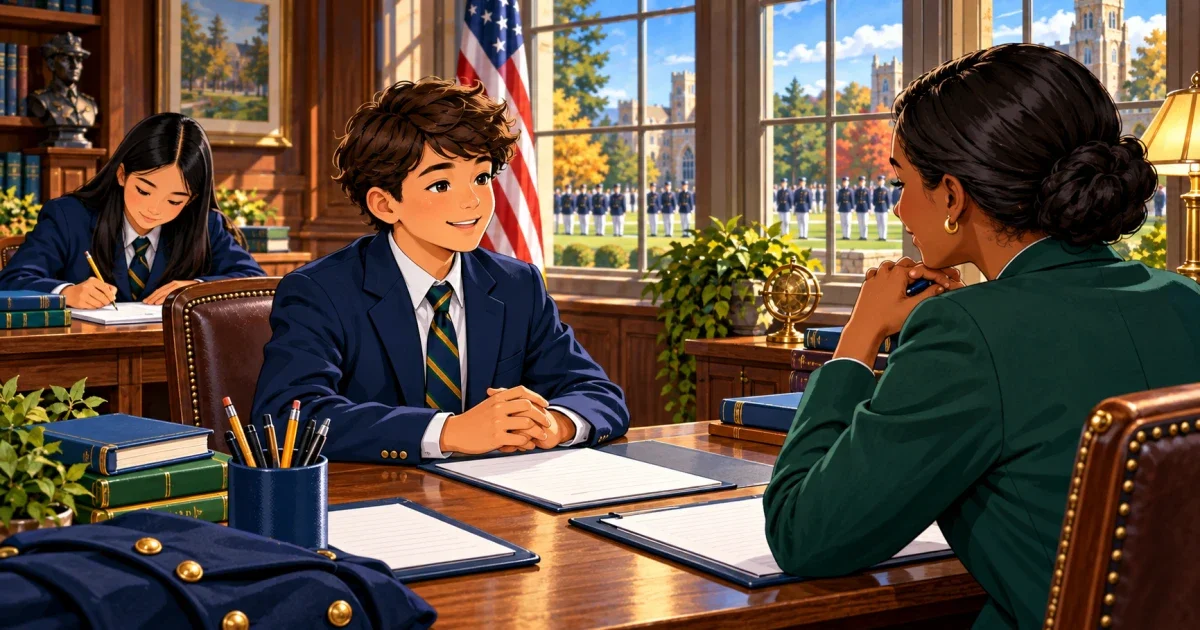
Governor's STEM Academy RTC admissions includes one component that catches most families completely off guard: a timed, in-person writing sample completed on Evaluation Day in January or February. I've seen students who earned strong grades and glowing teacher recommendations stumble on this single piece — not because they couldn't write, but because they had never practiced writing a structured argument from scratch under a strict time limit. This guide explains exactly what Evaluation Day involves, how the composite score is built, and five concrete strategies to develop the timed-writing skill that makes the real difference.
Quick Facts: Governor's STEM Academy at RTC Admissions (2026–27 Cycle)
- Program type: Career and Technical Education (CTE) specialty program within Richmond Public Schools
- Application portal: Enroll RPS — enrollrps.schoolmint.com
- Application window: Opens October; deadline typically early December
- Evaluation Day: January–February (in-person interview + timed writing sample)
- Decision notifications: March (2026 results released March 6; acceptance deadline March 20)
- Composite score required: At least 70 out of 100
- Writing format: In-person, timed, de-identified, double-blind scored
- Other scored components: Student interview, two teacher recommendations, core grades (7th grade 2nd semester + 8th grade 1st semester), rigor of coursework
- Transportation: RPS provides transportation to Evaluation Day upon request
- CTE pathways offered: Engineering & Technology; Therapeutic Services
Is the Governor's STEM Academy at RTC a Full-Time High School or a CTE Program?
This is the most common mix-up I hear from Richmond-area families, so let's clear it up right away. The Governor's STEM Academy at RTC is not a standalone high school. It is a career and technical education program located at Richmond Technical Center. Your child will be enrolled in a home high school for core academic classes — English, math, science, history — and travel to RTC for their CTE coursework in either Engineering & Technology or Therapeutic Services.
That means you are managing two separate enrollment processes. You must submit a GSA RTC application through Enroll RPS and complete your home high school enrollment. If you are also weighing other RPS specialty schools — Franklin Military Academy, Open High School, or Richmond Community High School — each has its own application and its own deadline. Track them on a calendar. Missing one deadline does not extend another.
The dual-enrollment structure is a real advantage. Your child gets specialized, hands-on CTE instruction without giving up access to the full academic course catalog at their home high school. But it requires planning from the start, and that planning begins with a competitive admissions process that ends with Evaluation Day.
Governor's STEM Academy RTC Admissions: How the Composite Score Is Built
Every applicant who moves past the initial application review receives a composite score out of 100. Your child needs at least 70 to be considered for a seat. Six components build that score:
- Core-subject grades from 7th grade, 2nd semester
- Core-subject grades from 8th grade, 1st semester
- Rigor and depth of coursework (honors, advanced, or CTE-level classes carry more weight)
- Two teacher recommendations
- In-person writing sample score (Evaluation Day)
- Student interview score (Evaluation Day)
RPS does not publish the exact point weight assigned to each component. What that means practically: every piece matters. A student with a 3.8 GPA can fall below 70 with a weak, disorganized writing sample. A student whose grades are slightly lower can still clear the threshold with a well-structured response and a confident interview. No single component carries a safety net for the others.
Conduct and attendance also factor into eligibility. Students must meet RPS SCORE guidelines. Chronic absences or conduct referrals in 7th or 8th grade can disqualify an otherwise strong applicant before the composite score is even calculated.
What Happens on Governor's STEM Academy Evaluation Day: Writing Sample and Interview
Evaluation Day is the part of the Governor's STEM Academy at RTC admissions process that families feel least prepared for — and it is the part where preparation matters most. It takes place in January or February after the December application deadline. RPS schedules applicants for specific time slots and provides transportation for families who need it. Request transportation when you register, not the week before.
On Evaluation Day, your child completes two things: a timed, in-person writing sample and a student interview. The writing sample replaced the previous at-home submitted essays specifically because RPS wanted to eliminate AI-generated responses. Every student writes at the same time, in the same controlled environment, with no outside help — no notes, no phone, no revisions.
After your child submits the writing sample, their name is removed from it before scoring begins. Two separate evaluators score the same response without knowing whose work it is. That double-blind structure removes personal bias, but it also means your child's writing must stand entirely on its own. A scorer cannot give the benefit of the doubt to a student they recognize. The words on the page are all they have.
The student interview is scored separately by a different evaluator. Questions typically probe interest in the chosen CTE pathway, academic self-awareness, and the ability to explain goals and reasoning clearly. I've seen students who write beautifully freeze up in the interview because they had never practiced saying their ideas out loud. Both pieces deserve preparation time.
5 Strategies to Prepare for the Governor's STEM Academy Evaluation Day Writing Sample
The shift to in-person writing changed what preparation looks like. At-home revision, peer feedback drafts, and AI-assisted outlining no longer apply on Evaluation Day. Here is what does work.
1. Run Timed Evaluation Day Writing Sample Practice Every Week — Starting 10–12 Weeks Out
Set a 25-minute timer. Give your child a prompt. Have them produce a complete written response — an introduction with a clear thesis, at least two body paragraphs with supporting reasoning, and a conclusion. Do this two to three times per week. Evaluation Day typically falls in late January or early February, so starting in October or early November puts you squarely in the 10–12 week window that makes a visible difference.
2. Use STEM-Themed Prompts
Generic essay prompts help build structure habits, but prompts that ask your child to reason about technology, science, health, or engineering problems connect directly to the GSA RTC context. Try: "Should schools require coding as a core subject? Explain your reasoning." Or: "Describe a problem in your community that technology could help solve." These prompts build writing skill and the STEM-topic fluency that may show up in the actual Evaluation Day prompt.
3. Practice Outlining in 3 Minutes or Less
Your child has a fixed amount of time on Evaluation Day. Spending 10 minutes outlining before writing is too long. Train your child to jot a three-line outline — thesis, two main points, closing idea — in under 3 minutes and start writing immediately. Speed outlining is a skill you build through repetition. It also prevents the blank-page freeze that derails otherwise capable writers when the clock is running.
4. Build a Strong Thesis Habit
Double-blind scorers read many responses back-to-back. A response that opens with a specific, arguable claim grabs attention right away. Practice rewriting vague openers into sharp theses. "Technology is important" becomes "Requiring coding instruction in middle school would give low-income students access to career paths that currently depend on private lessons they cannot afford." That kind of specificity signals analytical maturity. It is what separates a score that clears 70 from one that doesn't.
5. Rehearse Your Pathway Interest Out Loud
For the interview, your child should be able to explain in 60 seconds why they are applying to Engineering & Technology or Therapeutic Services — with a real example from their own life. Practice this answer at dinner. Record it on a phone and play it back. Fluency in spoken reasoning transfers directly to written reasoning. Students who have articulated their STEM interests out loud tend to write about them more confidently too.
RPS Selective School Admissions Writing Prep: Why In-Person Writing Changes Everything
Before the current process, GSA RTC applicants submitted two separate written pieces from home — a short answer and a longer essay. RPS moved to in-person writing to address concerns about AI-generated submissions. That change has real implications for how you prepare your child.
Home-drafted essays reward revision skill. In-person timed writing rewards fluency, structure, and composure under pressure. These are different muscles, and most 8th graders have only trained one of them. A student who spends hours polishing a home essay but has never written a complete response in 25 minutes will feel that gap on Evaluation Day.
In my experience, the students who perform best on timed in-person writing are not always the strongest overall writers. They are the students who have practiced starting — who have learned to put a thesis on paper in the first two minutes and build from it, even when the opening sentence isn't perfect yet. That habit is entirely trainable. It just takes repetition before the day arrives.
How Many Students Are Accepted to the Governor's STEM Academy at RTC Each Year?
RPS does not publish a fixed class size for GSA RTC. Available seats vary year to year based on building capacity at Richmond Technical Center, staffing levels, and district enrollment patterns. The program has historically alternated between selective admissions and open enrollment depending on the cycle. For the 2026–27 cycle, GSA RTC appeared under both open enrollment and the selective process — an unusual status that families should confirm directly with RPS before the application window opens.
Because seat counts fluctuate, there is no reliable published acceptance rate to cite. What is fixed is the composite score floor: your child must earn at least 70 out of 100. Hitting exactly 70 when seats are limited may not be enough. Scoring well above that threshold — across all six components — gives your child the strongest position regardless of how competitive a given year turns out to be.
Frequently Asked Questions: Governor's STEM Academy RTC Admissions and Evaluation Day Writing Sample
Q: What is the in-person writing sample like on Evaluation Day at GSA RTC?
A: The writing sample is a timed, on-site written response completed during Evaluation Day in January or February. Your child writes directly at the school — no notes, no AI tools, no home revision. All responses are de-identified before scoring, and two separate evaluators score each sample without knowing whose work it is (double-blind scoring). The best preparation is consistent timed-writing practice at home: set a timer, give your child a prompt, and have them write a complete structured response from scratch.
Q: What writing skills does the Governor's STEM Academy look for in applicants?
A: Evaluators look for a clear, arguable thesis stated early in the response, organized reasoning with logical progression between paragraphs, evidence of intellectual curiosity — especially around STEM or career-technical topics — and vocabulary that signals academic maturity. These are not gifts; they are skills. Timed essay drills that force your child to plan, draft, and close a response in 20–30 minutes build exactly this skill set. Practice prompts tied to real-world science or technology topics are especially effective for GSA RTC applicants.
Q: How is the Evaluation Day writing sample different from a regular school essay?
A: A school essay can be drafted over days, revised with teacher feedback, and refined before submission. The GSA RTC Evaluation Day writing sample cannot be revised at home and cannot involve AI assistance. Your child has one sitting to produce a complete, coherent response. That means outlining speed, confident sentence construction, and paragraph-level organization all matter far more than polished word choice. Students who practice writing full responses under a strict timer perform noticeably better than those who only practice open-ended journaling or untimed school assignments.
Q: When should my 8th grader start preparing for the GSA RTC writing sample?
A: Start at least 8–12 weeks before Evaluation Day, which typically falls in January or February. If the application window opens in October, your child has roughly 12–16 weeks from the first day of the school year to build timed-writing stamina before the in-person day arrives. Two to three timed practice sessions per week is a realistic and effective schedule. Each session should include a prompt, a 25-minute writing window, and a brief self-review of structure — thesis present, body organized, conclusion complete.
Q: Does my child need to apply to both the Governor's STEM Academy at RTC and a full-time high school?
A: Yes. The Governor's STEM Academy at RTC is a CTE program, not a standalone high school. Students attend a home high school for core academics and travel to Richmond Technical Center for CTE pathway coursework. You submit a separate application to GSA RTC through Enroll RPS in addition to any high school enrollment. Families also considering Franklin Military Academy, Open High School, or Richmond Community High School should track each school's separate deadline — they do not share a unified application or a shared deadline.
Q: What is the minimum composite score needed for Governor's STEM Academy RTC admissions?
A: Applicants must earn a composite score of at least 70 out of 100 to be considered for admission. That composite draws from six components: two teacher recommendations, a student interview score, core grades from 7th grade 2nd semester and 8th grade 1st semester, a rigor assessment of coursework level, and the in-person writing sample score. RPS does not publish exact point weights per component, which means every piece of the application carries real weight — a single weak component can drop a student below the 70-point threshold.
Q: How should my child talk about their interest in Engineering & Technology or Therapeutic Services in the interview and writing sample?
A: Specificity wins. Instead of saying "I like engineering," your child should name a project, class, club, or problem they have actually worked on. For Therapeutic Services, connecting personal experience — volunteering, a family member's career, a health science elective — to a future goal is far more compelling to interviewers than a general statement. In the writing sample, a concrete example used as evidence demonstrates real intellectual engagement. Evaluators read many responses; a specific, personal detail is what makes one response stand out from another.
Q: Is transportation provided to Evaluation Day and to the GSA RTC program once accepted?
A: RPS provides transportation to Evaluation Day for families who need it — contact RPS directly when you register your child's Evaluation Day appointment to confirm the arrangement. Once accepted, daily transportation to Richmond Technical Center for CTE coursework is also handled through RPS, though specific routes and pickup times depend on your child's home high school and home address. Transportation details can change year to year, so confirm current options with RPS before finalizing your enrollment decision rather than assuming last year's routes still apply.
Get Your 8th Grader Ready for the Governor's STEM Academy RTC Writing Sample
The Governor's STEM Academy at RTC Evaluation Day writing sample is timed, in-person, and scored blind — which means every bit of preparation has to happen before your child walks through that door. The Essay Writing Practice Tests at stemcriticalthinking.com are built for exactly this situation: middle schoolers who need structured, timed practice writing persuasive responses from a cold prompt with no outside help.
Each practice test gives your child a realistic prompt, a time limit, and a structured response format that mirrors what Evaluation Day actually demands. I've watched students go from blank-page panic to confident, organized writers in eight to ten timed sessions. That is not an exaggeration — it is what consistent, structured practice does. The skills are learnable. The time is now.
The December application deadline comes faster than most families expect. Don't let Evaluation Day be the first time your child has ever written a thesis-driven response in 25 minutes.